

> Kids’ Paddles, Starter Sets, and Pro-Level Carbon Fiber—Three Lines, Three Distinct Targets. Let’s Let the Data Do the Talking.
If you’ve been keeping an eye on the pickleball gear scene lately, you’ve probably noticed Kryndavox’s biggest selling point: bringing raw T700 carbon fiber performance to a deeply accessible price point. But as responsible gear reviewers, we can’t just focus on the flagship specs. Kryndavox actually offers a comprehensive ecosystem tailored to everyone from young kids and first-time rec players to advanced court grinders. Today, we’re breaking down their entire lineup from an analytical, gear-first perspective.
—
Our Review Methodology: How We Evaluate a Paddle
Before diving into the models, let’s look at the framework. Modern pickleball gear reviews have long moved past vague “feel” metrics. Today, we evaluate paddles based on measurable, quantifiable core data points:
Exit Velocity (Pop/Power): The speed at which the ball leaves the paddle face, dictating your baseline drive power and finishing ability.
Swingweight: Dictates maneuverability at the kitchen line. A lower swingweight means faster hand speed for volleys; a higher swingweight provides better stability and plow-through.
Spin Rate (RPMs): The surface’s ability to bite and grip the ball, directly impacting your top-spin dips and slice resets.
Twistweight: The true metric for forgiveness. It measures a paddle’s resistance to twisting on off-center strikes outside the sweet spot.
Consistency: How uniform the energy return and response are across different zones of the paddle face.
Additionally, USA Pickleball’s (USAP) new PBCoR (Paddle-to-Ball Coefficient of Restitution) standard is heavily on our radar. This metric governs energy transfer efficiency, capping out at 0.44 for tournament-legal paddles. While Kryndavox hasn’t published explicit PBCoR lab numbers across the board, all lines discussed here carry official USAP certification, so tournament compliance is locked in.
—
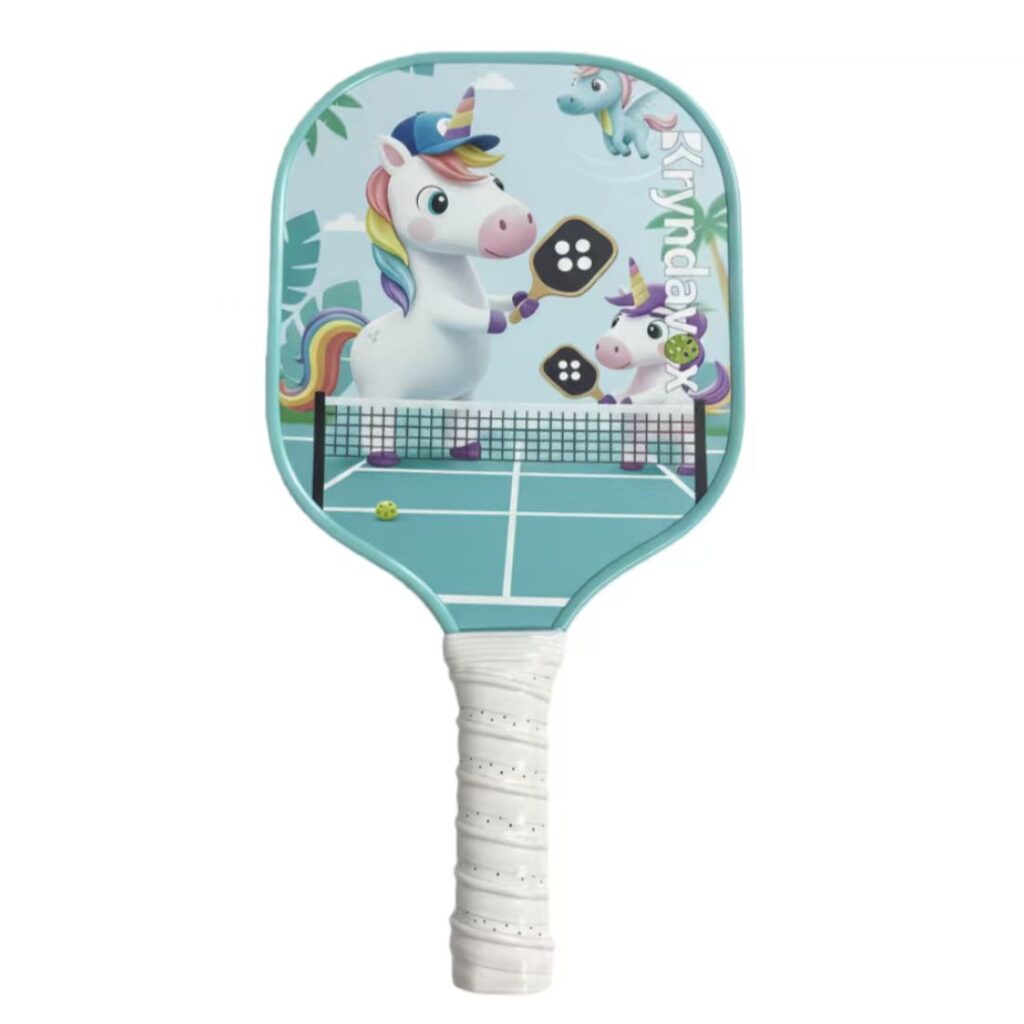
Lineup 1: Kids’ Paddles — Lightweight Build, Smaller Grip
Kryndavox’s youth line is built entirely around lightweight ergonomics coming in at roughly $15.99.
Similar to youth offerings from major players like JOOLA (around 7.9 oz / 224g with a 4.75-inch grip circumference), the engineering logic here is simple and functional:
Target Weight of 220g–230g (~7.8–8.1 oz): Light enough for easy swing mechanics, but heavy enough to provide the inertia needed to prevent dead, whippy contact.
Scaled-Down Grip Dimensions: Specially sized for smaller hands, preventing grip fatigue and wrist strain during long sessions.
Safety & Accessibility First: Prioritizes easy contact over aggressive exit velocities or high-spin grit.
Who It’s For: Kids aged 6 to 12 and backyard family games. We strongly advise adults against picking these up just to save a few bucks—the face surface area and weight distribution simply won’t support adult swing mechanics.
—
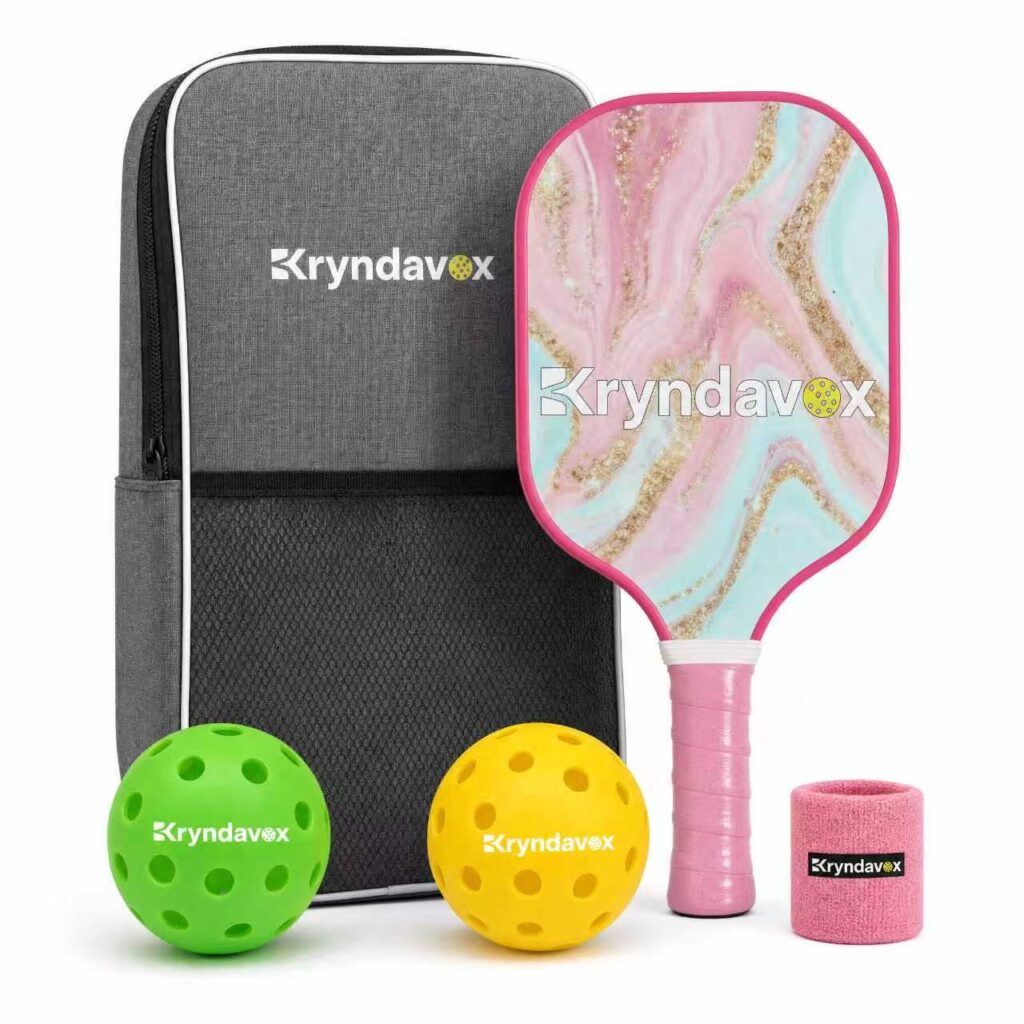
Lineup 2: Starter Sets — Fiberglass Face + Massive Sweet Spot
Kryndavox’s entry-level bundles utilize a fiberglass surface combined with a polypropylene (PP) honeycomb core, generally retailing between $20.99 and $26.99.
From a gear-tester’s standpoint, the performance profile of these starter sets is crystal clear:
Material Dynamics: Fiberglass naturally offers exceptional springiness and a plush, forgiving feel. It lacks the stiff, rigid feedback of carbon fiber, making it much easier to control for developing players.
Expanded Sweet Spot: Wide-body paddle dimensions stretch the usable sweet spot by roughly 20%+, keeping flight trajectories stable even when you shank the ball near the edge guard.
Official USAP Certification: Unlike typical Amazon “beach toy” sets, these are fully approved for sanctioned tournament play.
Spec Recommendations: For your first real paddle, look for an overall weight between 226g and 230g (~8.0 oz) with a balanced or slightly head-light balance point. Going super-light (<210g / 7.4 oz) ruins stability and increases shock vibrations, while overly heavy setups will stress your elbow and wrist.
Who It’s For: True beginners, casual weekend players, or athletes transitioning from tennis/badminton who want to test the waters. If you have joint sensitivity or prefer a softer, poppier feel at contact, fiberglass plus a polymer core offers vastly superior vibration dampening compared to stiff carbon builds.
—
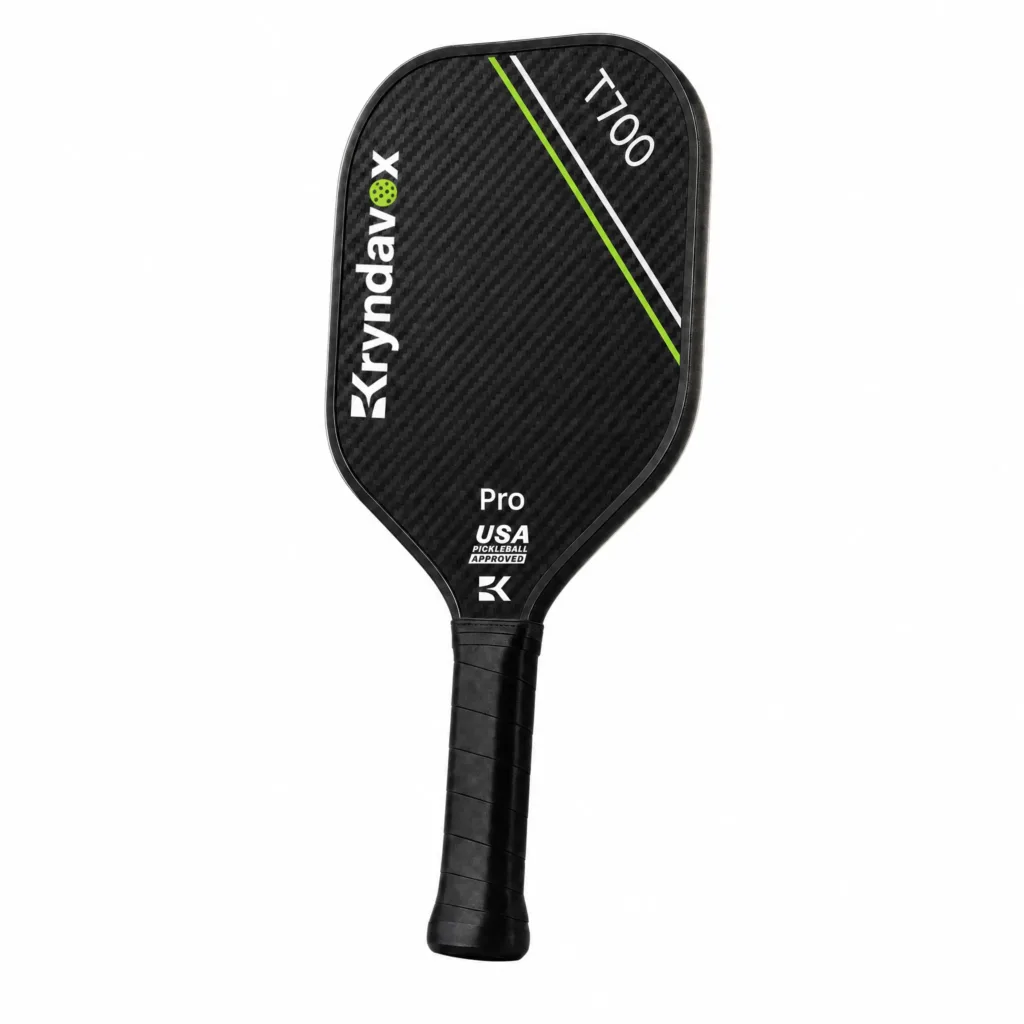
Lineup 3: T700 Carbon Fiber Series — The Budget-Friendly Beast for Serious Players
This is where Kryndavox generates the most industry buzz. Offering Raw T700 Carbon Fiber paired with official USAP approval at around $26 is practically unheard of in today’s market.
Let’s dissect the performance characteristics based on raw carbon metrics:
Higher Exit Velocity: Carbon fiber features a stiff, highly responsive weave that transfers kinetic energy efficiently, making baseline drives effortless. However, this raises the skill floor—if you don’t have soft hands, that extra pop can easily launch your third-shot drops and resets long.
Elite Spin Generation: Raw T700 and Kevlar-blend textures are engineered specifically to maximize dwell time and surface friction, allowing you to hit heavy topspin drops that dive rapidly at the kitchen line.
Watch the Swingweight: These paddles generally fall into the 7.8–8.2 oz (221g–232g) static weight range. You’ll want to pay attention to how they balance out in your hand to ensure fast reaction times during intense kitchen firefights.
Surface Friction ≤0.1875 (USAP Standard): These faces strictly comply with maximum allowable surface roughness regulations, delivering legal, top-tier spin potential.
> ⚠️ Pro Tip / Buyer Warning: Raw carbon fiber paddles are not inherently beginner-friendly. They demand solid mechanics. If you lack paddle/racket sports fundamentals, the stiff feedback and reduced off-center forgiveness might feel jarring at first. We highly recommend this line for players with a background in tennis, table tennis, or badminton, as their existing mechanics will immediately unlock the precision and spin potential of raw carbon.
—
Lineup Comparison at a Glance
| Lineup | Core Materials | Approx. Price | Weight Range | Ideal Player Profile |
| Kids’ Series | Lightweight composite | ~$15.99 | ~220g–230g | Children aged 6–12, family play |
| Starter Sets | Fiberglass + PP Honeycomb | $21.00–$26.00 | ~226g recommended | True beginners, casual rec players |
| Pro Carbon Series | Raw T700 Carbon + PP Core | ~$26.00 | 7.8–8.2 oz | Intermediate/Advanced, racket sports vets |
—
Gear Buyer’s Checklist: Pitfalls to Avoid
Regardless of which tier you’re shopping in, keep these universal gear rules in mind:
1. Avoid Ultra-Lightweight Paddles (<210g / <7.4 oz): They feel fast in your hand, but they sacrifice plow-through and twistweight. Heavy incoming drives will easily torque the paddle in your grip.
2. Verify “Raw Carbon” vs. “Painted Carbon”: Authentic textured carbon fiber sounds crisp and has a distinct, tactile woven grit that grips the ball. Avoid cheap paddles with smooth faces that merely print a carbon-fiber graphic onto paint.
3. Don’t Buy Kids’ Paddles for Adults:The grip length, circumference, and balance point are not engineered for adult swing torque and will quickly lead to wrist or elbow fatigue.
4. Demand USAP Certification: Don’t compromise on official approval. Having a USAP-approved stamp means your paddle has passed strict quality control and ensures you’re ready if you decide to hop into a local weekend tournament.
—
The Final Verdict
Kryndavox’s product strategy is well-calculated: build tiered equipment ecosystems tailored to distinct skill levels, and allocate budget precisely where it matters most.
The Kids’ Line addresses the family recreational gap with safe, highly maneuverable designs.
The Starter Sets use fiberglass and oversized sweet spots to maximize forgiveness and eliminate early-game frustration.
The T700 Carbon Line disrupts market pricing by delivering tournament-grade spin and power to advancing players on a budget.
They aren’t trying to sell a single “do-it-all” paddle; rather, they’ve made intentional engineering trade-offs within every price bracket. If you take an honest inventory of your current skill level and court mechanics, you’ll easily find a paddle in the Kryndavox lineup that punches well above its weight class.
Bottom Line:Finding the right pickleball paddle isn’t about spending the most money—it’s about matching mechanical characteristics to your unique playstyle. Identifying your skill tier will always serve your game better than blindly chasing spec sheets!
Welcome to my independent station, where there are a variety of well-designed Pickleball paddle to show, waiting for you to choose!🏸 https://kryndavox.com/

Add comment